• 05/29/2026

Urban Climate Adaptation – A GaLaBau Perspective

The consequences of climate change have long since become a reality. Urban heat islands, drought, flooding and heavy rainfall events require short-term, effective climate adaptation – above all in urban areas. At the same time, contributions to climate protection remain indispensable: emissions must fall, green spaces need to sequester carbon and cities must become more resource-efficient. Climate change may no longer be fully stoppable, but it can at least be slowed down.

Written by Andreas Hempfling

Rainwater management: infiltration surfaces in urban spaces
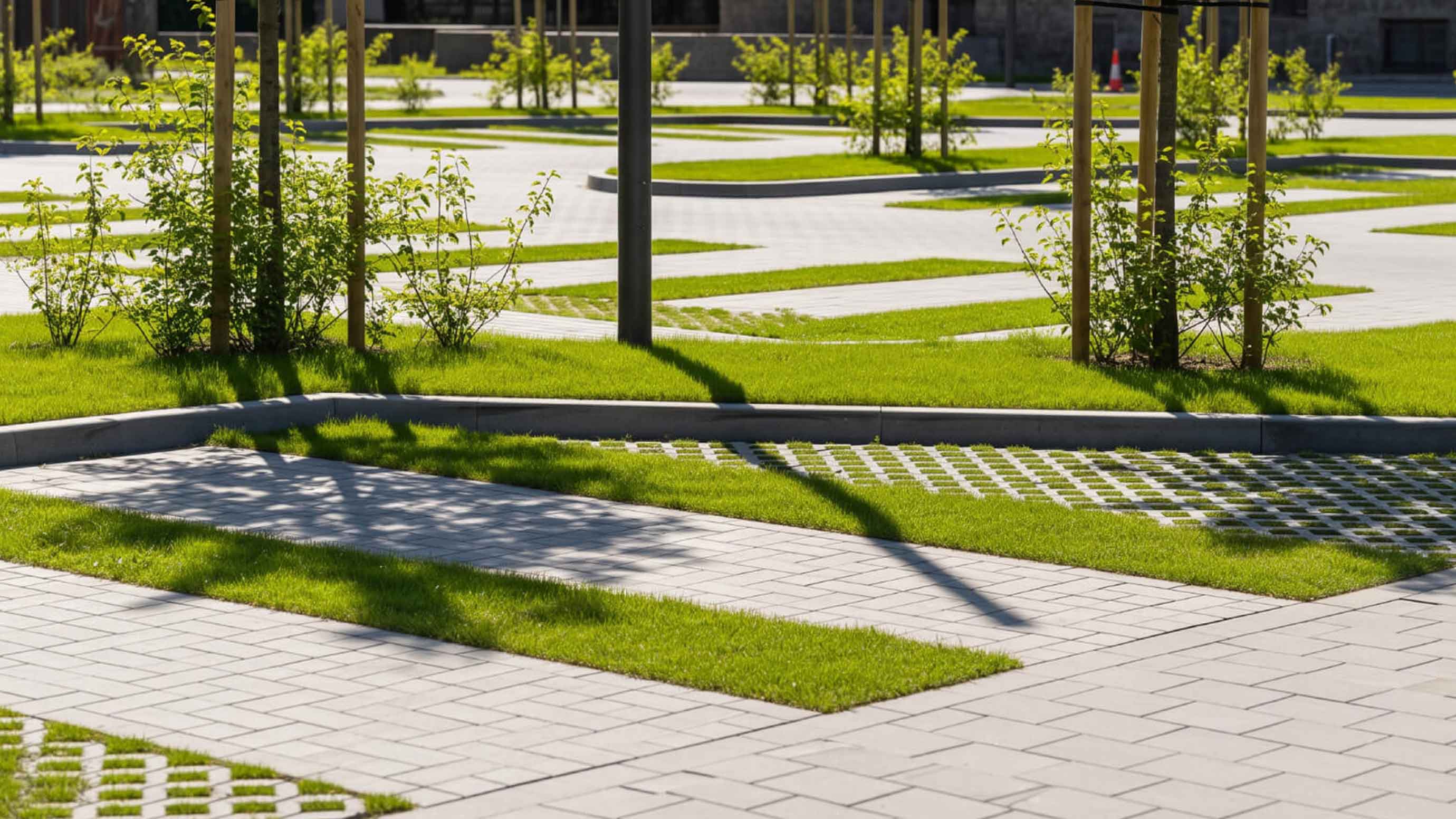
Permeable paving and greenery along an urban canal

Climate Adaptation and Climate Protection – A Strong Duo or Opposing Forces?

The consequences of climate change have long since become a reality. Urban heat islands, drought, flooding and heavy rainfall events require short-term, effective climate adaptation – above all in urban areas. At the same time, contributions to climate protection remain indispensable: emissions must fall, green spaces need to sequester carbon and cities must become more resource-efficient. Climate change may no longer be fully stoppable, but it can at least be slowed down. For municipalities and for the gardening and landscaping sector, which implements many of the necessary measures, climate adaptation and climate protection are not an either/or decision. Both are indispensable, and many projects serve both purposes: urban greenery, for instance, makes urban spaces more resilient while simultaneously helping to regulate the climate. We summarise the key points in this article – and for even more inspiration, visit the next GaLaBau trade fair in September 2026. Information for your visit can be found here on our website.


Why Cities Are Particularly Hard Hit

Cities feel the impacts of climate change with particular intensity – for example through increasingly frequent heatwaves with more hot days and nights. City centres act as urban heat islands: tropical nights occur there up to three times more often, and night-time temperatures can be up to 10 °C higher than in the surrounding areas. In response, the Bavarian State Government launched the environmental initiative “Stadt.Klima.Natur” (City.Climate.Nature) back in 2019. More information is available on the website of the Bavarian Environment Agency (in German).

Sustainable urban planning requires that measures against heat be considered from the outset in development and land-use planning. Many municipalities now integrate building greening into their heat action plans. At the same time, the gardening and landscaping sector faces the challenge of implementing all of this to a high professional standard. Businesses with the appropriate expertise can position themselves perfectly here.

Dense development and sealed surfaces not only intensify heat, they also reduce water permeability and increase the impact of heavy rainfall. This in turn raises the burden on people, infrastructure and ecosystems.

The effects of climate change are particularly evident in the following, partly contradictory impacts:

  • increasing heat stress
  • severe drought
  • falling groundwater levels
  • damage caused by heavy rainfall
  • flooding and inundation

Building greening, surface unsealing, rainwater management, renaturalisation measures and flood retention basins are among the effective climate adaptation measures to which the gardening and landscaping sector can make a valuable contribution. At the same time, such projects measurably support climate protection: green spaces sequester CO₂, cool their surroundings, improve air quality and reduce energy demand.


Building Greening as a New Carbon Sink

Parks, street trees and green spaces remain central carbon sinks, but they are no longer sufficient on their own – additional land is scarce and expensive in cities. New potential for urban climate adaptation therefore arises above all where few people have looked before: on roofs and facades. Roof and facade greening creates urgently needed additional urban greenery, improves the microclimate and supports both climate protection and adaptation measures such as rainwater retention, shading and evaporative cooling.
The effects of green roofs on reducing ambient temperatures are particularly direct and noticeable. Anyone wishing to explore this topic in greater depth can refer to the study “Building energy savings by green roofs and cool roofs in current and future climates”, published in npj Urban Sustainability on the Nature website.

In hospitals, for example, the literature estimates that the electricity required for cooling accounts for around 14% of total electricity consumption. According to an online article in the German medical journal Deutsches Ärzteblatt (in German), 47% of the hospitals surveyed use roof or facade greening to reduce heat in the building. This is an example that deserves to set a precedent. Further building blocks of a greener city include surface unsealing and the greening of previously asphalted areas – for example car parks or grassed tram tracks along tramlines.


Reactive and Proactive: Two Approaches to Climate Adaptation

Climate adaptation can be reactive – for example in response to damage caused by heat, drought or heavy rainfall. Even more effective, however, is a proactive approach, in which cities are made climate-resilient at an early stage. This is crucial because many measures – from surface unsealing and rainwater management through to new planting – require long planning and development times.

Street trees are particularly affected by climate change: they suffer from drought stress and require intensive irrigation. Climate-resilient plant species, targeted surface unsealing and intelligent management of precipitation water can help here. One example of how important proactive action is: when old trees are lost, they cannot be replaced quickly – and certainly not on a like-for-like basis. This underlines how important it is to invest early in future-proof planting concepts and improved site conditions. The initiative and expertise of gardening and landscaping businesses are also called for here.


Funding Programmes and Opportunities for Landscaping Businesses

Municipalities are often under financial pressure, yet climate adaptation is an issue that cannot be postponed. This makes funding measures all the more important. At European level, the EU’s Climate ADAPT platform provides an overview of policies, tools and funding opportunities for urban climate adaptation and for green and blue infrastructure. A dedicated EU funding of adaptation measures page on Climate ADAPT summarises the main European funding instruments that cities and regions can use for adaptation projects. Many countries, regions and cities have also launched their own funding schemes for green roofs and facades – a powerful lever for accelerating the implementation of necessary projects.

For the gardening and landscaping sector, this creates significant potential and a clearly defined field of activity: climate resilient plant selection, professional water management, surface unsealing, building greening and long term maintenance and development concepts. Urban green infrastructure has a double effect: it makes cities more resilient and at the same time supports climate protection by sequestering CO₂, providing ventilation corridors and noticeably reducing temperatures through evaporative cooling. This makes the gardening and landscaping sector a key partner in future oriented, climate adapted urban development.

Measures against Heat and Heavy Rainfall in Urban Areas

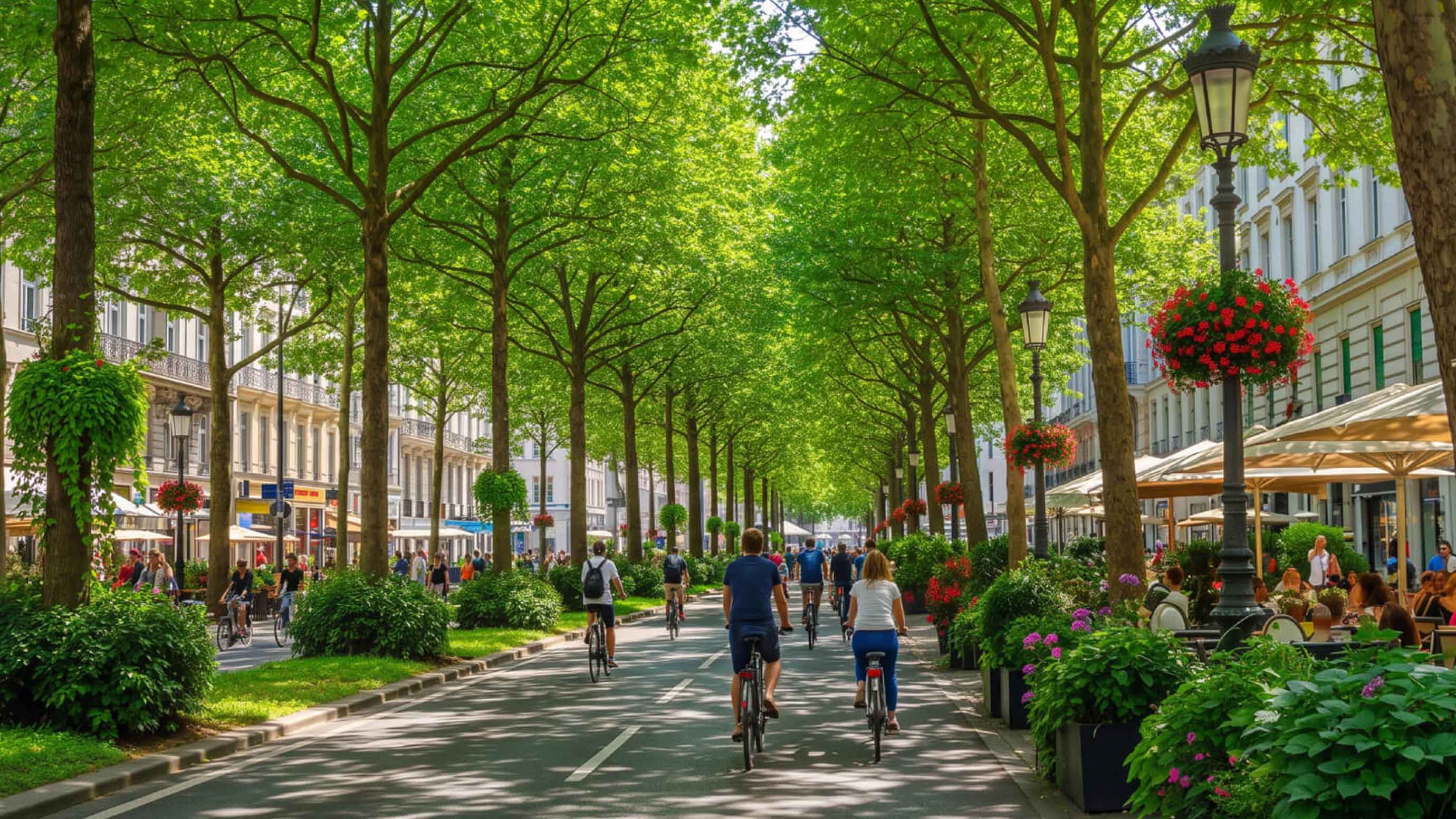
Tree-lined city street with cyclists and flowering planters
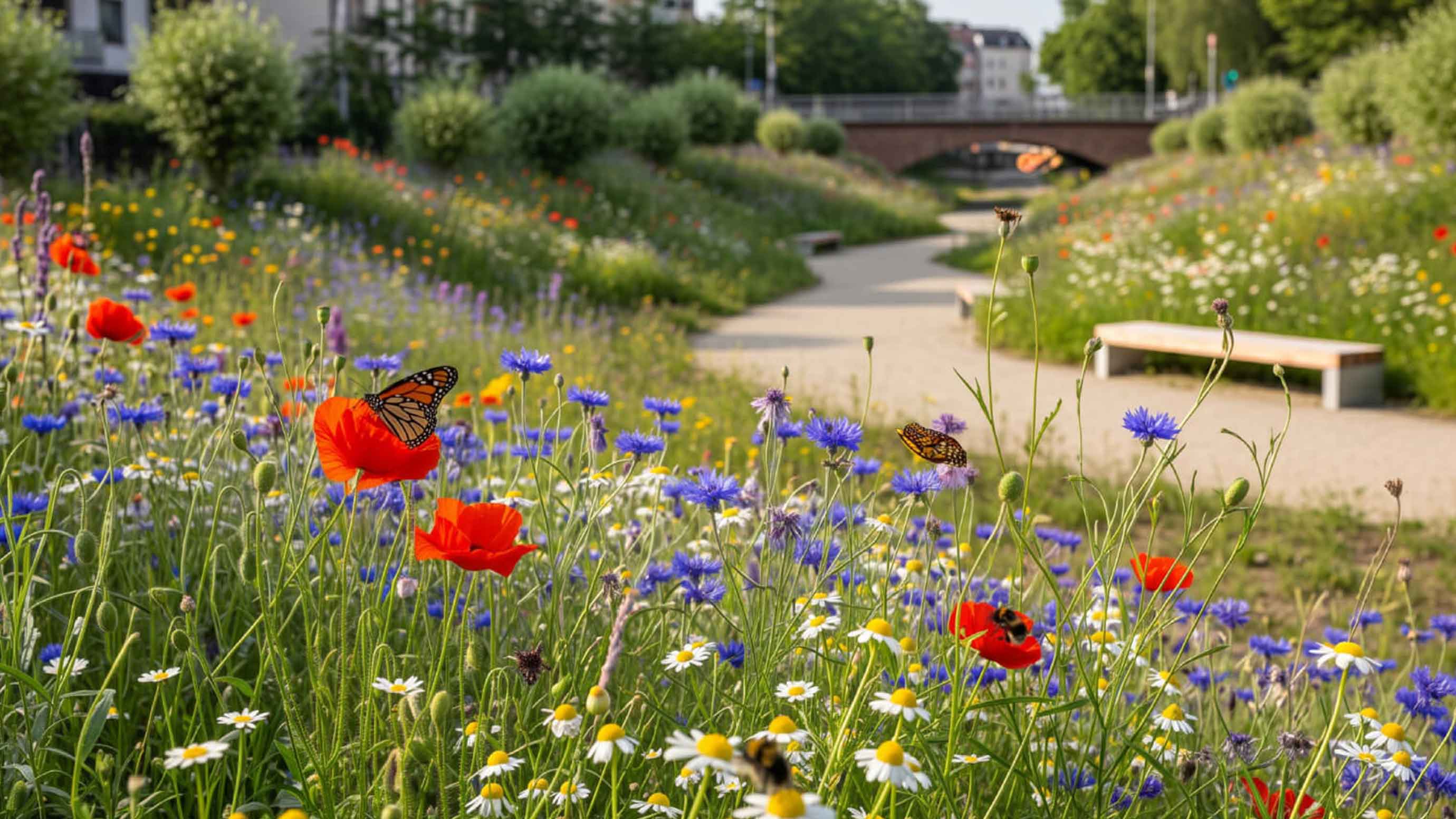
Colourful wildflower meadow with butterflies in an urban park
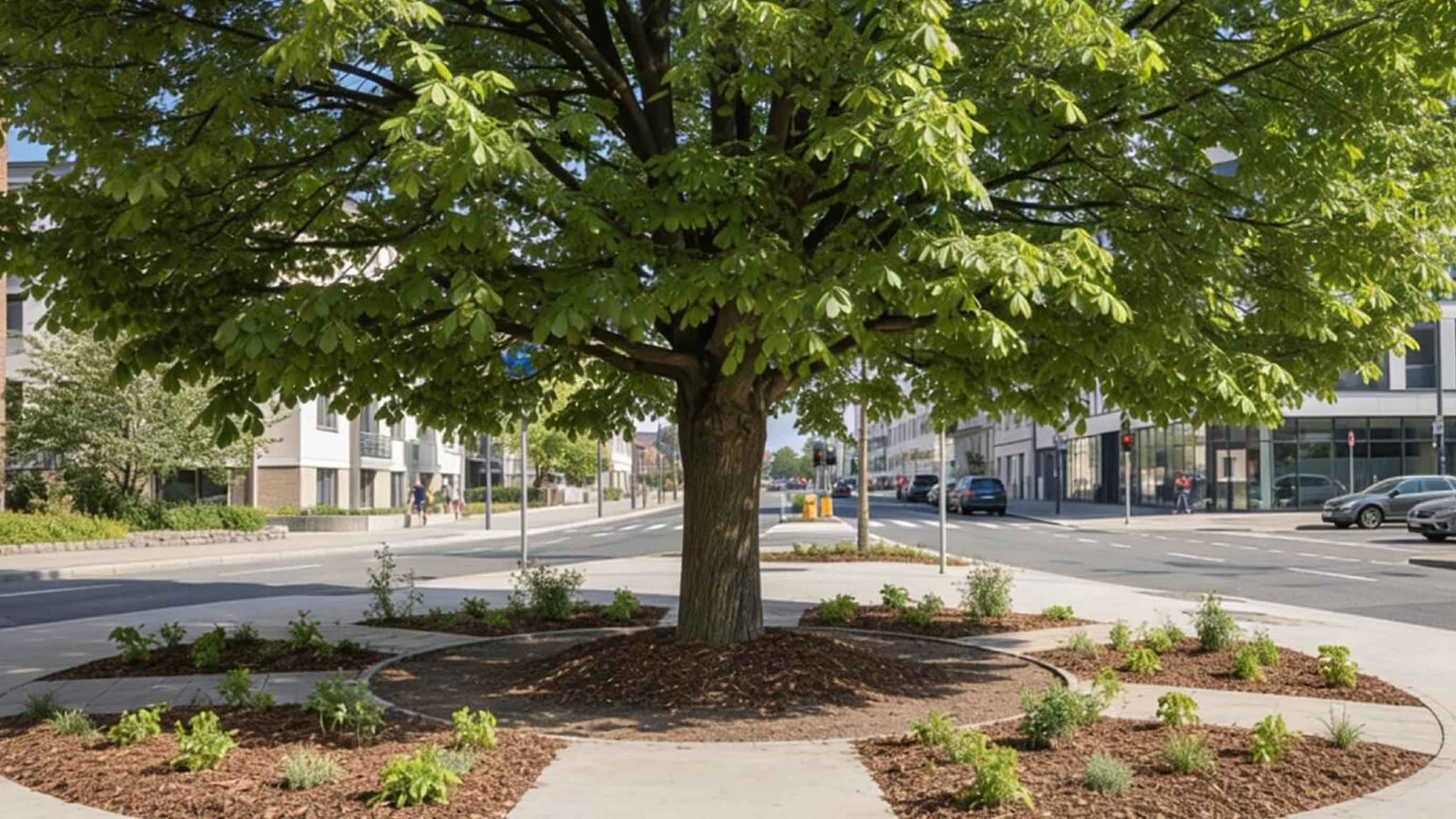
Large urban tree with planted tree pit at a street intersection
14

Author

Portrait Andreas Hempfling
Andreas Hempfling
Dipl.-Journalist and Redakteur Mobilität