
Municipalities Under Pressure: Climate Adaptation as a Must-Have
The effects of climate change is particularly evident in cities: high levels of surface sealing, heat-retaining buildings and narrow street spaces amplify the consequences of extreme weather events. These range from overloaded drainage systems, flooding , urban heat islands, increasing drought stress and declining street trees. New heat action plans, funding programmes and sustainable urban planning requirements add further pressure to act. Municipalities therefore need solutions that retain water, cool surfaces and stabilise vegetation in the long term – and they are turning to the expertise of landscape contractors to deliver them.
Effective climate adaptation is best achieved through multifunctional green-blue systems:
- Unsealing of surfaces and water-retaining substructures
- Retention swales, infiltration trenches and decentralised rainwater management
- climate-resilient trees and robust vegetation structures
- Green roofs and façade greening as integral elements of the sponge city
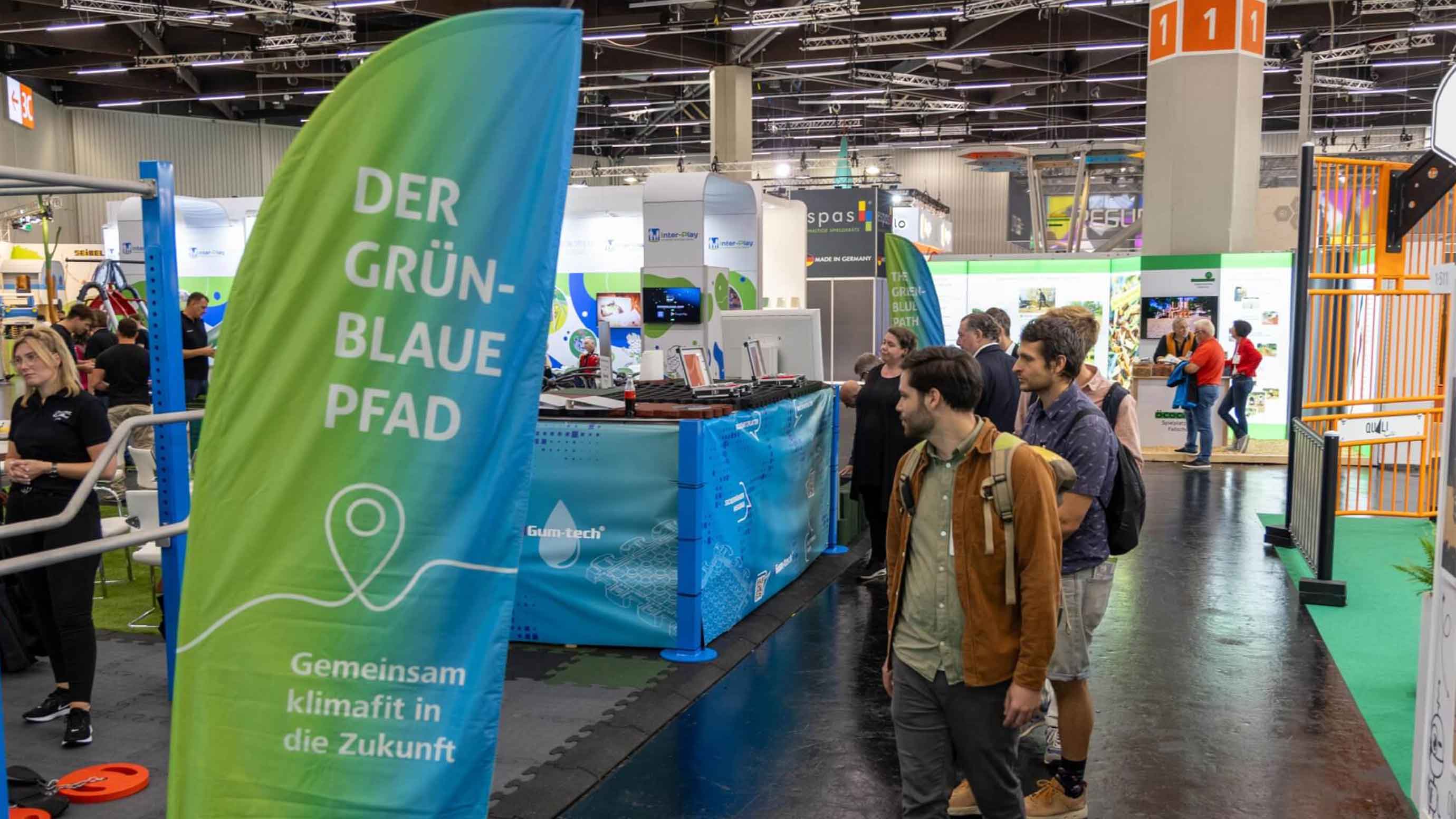
THE GREEN-BLUE PATH Towards the Climate-Resilient City of the Future
The quality of green-blue infrastructure is thus becoming an increasingly central element of modern public service provision for municipalities. Urban greenery plays an important role alongside other measures: An internationally recognised benchmark is the 3-30-300-rule of Prof. Dr. Cecil Konijnendijk:
3 trees visible, 30% canopy cover per neighbourhood, 300 m to the nearest green space. It serves as a practical target for healthy, climate-active and socially effective urban landscapes.
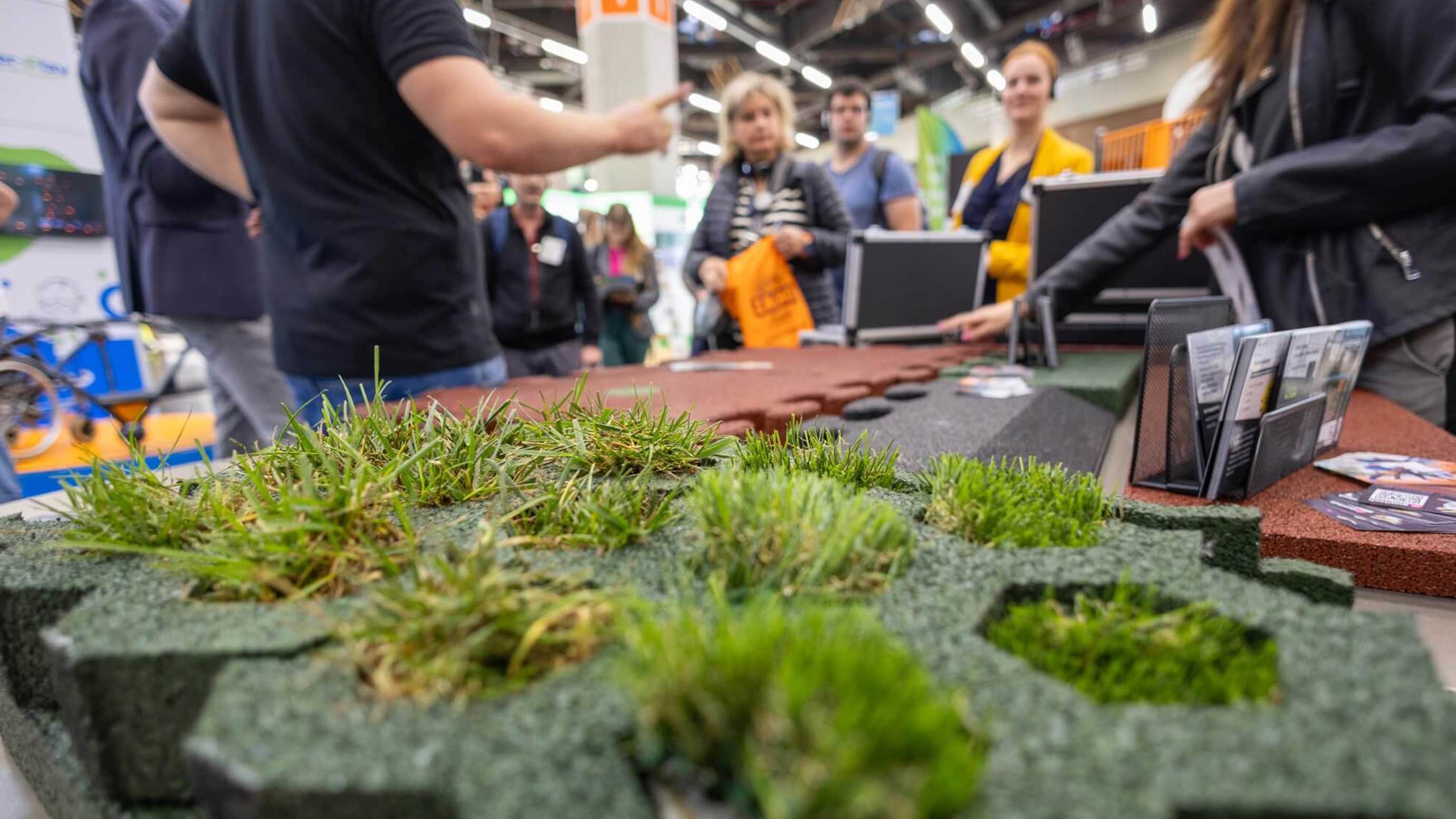
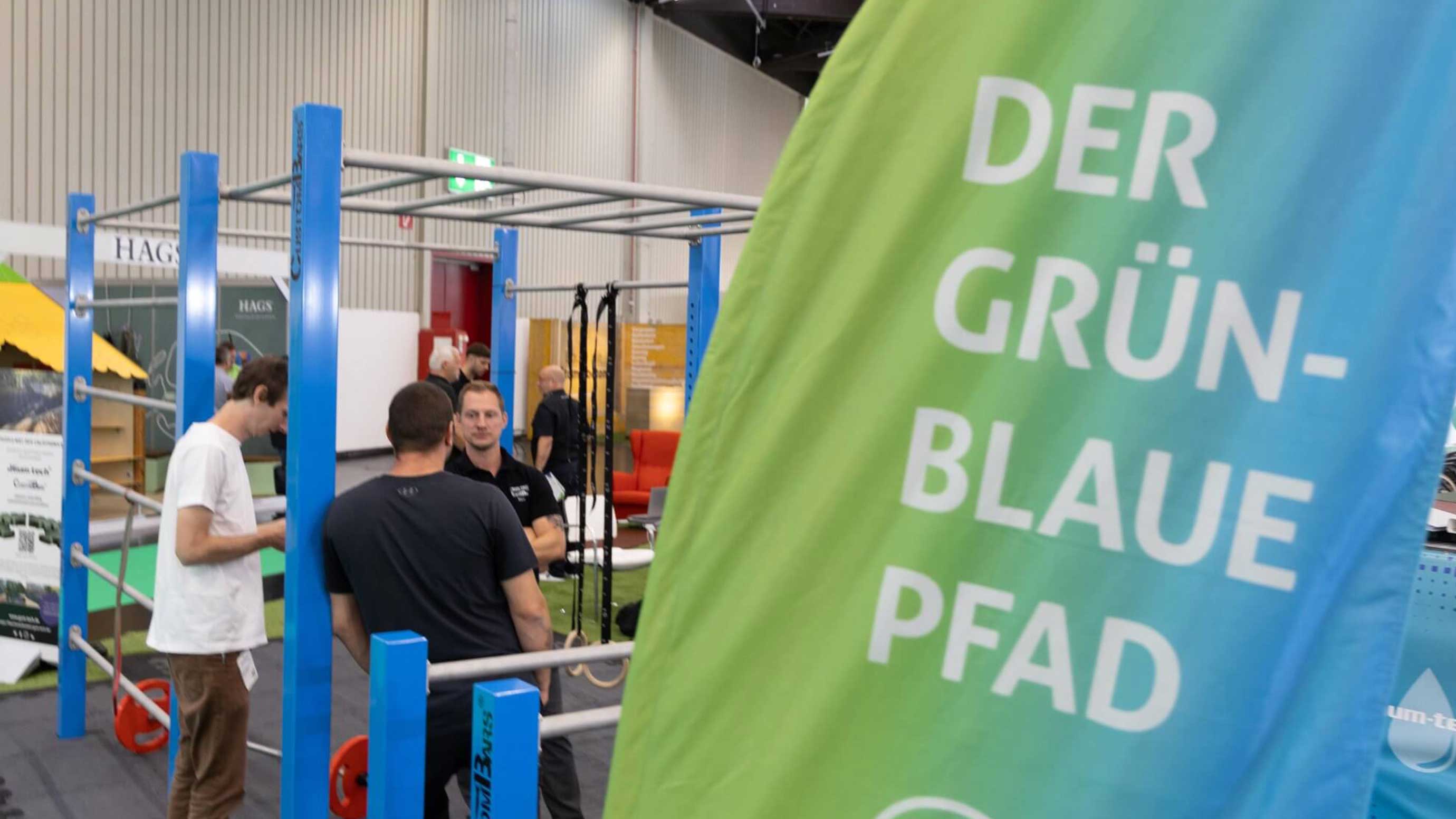
GaLaBau also plays a central role in climate adaptation across many other areas of urban life. At GaLaBau 2026, GREEN-BLUE PATH, the GREEN-BLUE PATH offers a comprehensive overview of relevant solutions, techniques and trends. Professionals can discover new methods, products, materials, climate-resistant plants, surface unsealing strategies and rainwater management systems, compare machinery, and exchange ideas with experts from practice, planning, administration and research.
For many businesses, the trade fair is thus becoming a decisive reference point for meeting the growing demands of municipalities with professional confidence and staying competitive.