
Future-Proof Woody Plants Drive Urban Climate Adaptation
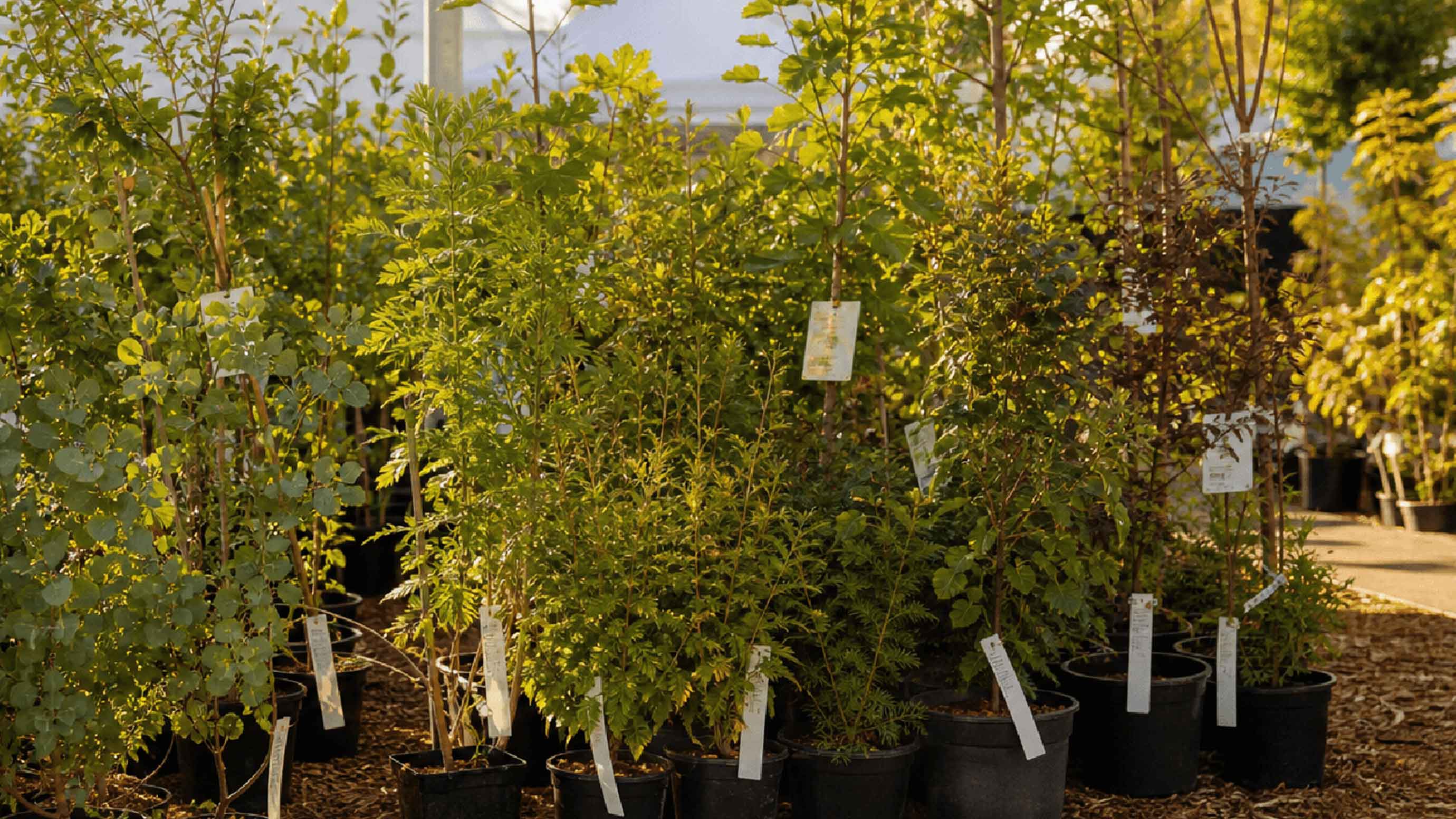
But what exactly are climate-resilient trees? There is no single, universally accepted scientific definition, says Dr Schönfeld. After studying landscape planning, he completed a doctoral dissertation on “Drought Resistance of Groundcover Woody Plants and Perennials” and has extensive expertise in this field. One thing is clear, however: the term “climate-resilient trees” refers to robust woody species that tolerate heat, drought and urban conditions well. When suitable shrubs and groundcover plants are also taken into account, experts use the broader term “future-proof woody plants”. These species are particularly well suited to the urgent task of adapting urban spaces to a changing climate.
Experience in Research and Practice
Dr Schönfeld is not only firmly rooted in theory – he also has many years of hands-on experience. Before joining the Bavarian State Institute for Viticulture and Horticulture (LWG) in Veitshöchheim near Würzburg in 1993, he worked as a site manager in landscape construction. At the LWG, he most recently headed the Urban Green department at the Institute for Urban Green Spaces and Landscape Construction before retiring. The topic, however, has never left him. On the contrary: in the face of climate change, it is more relevant than ever, and Dr Schönfeld is always happy to share his expertise and practical tips. The institute’s website also offers a wealth of additional information and resources on urban green spaces and landscape construction. Please note that the content is available in German only.
Key Resources for Selecting Climate-Resilient Trees
In Germany, two key resources help those responsible for urban green spaces, landscape architects and landscape contractors identify suitable climate-resilient trees. One important reference is the brochure “Future Trees for the City” (Zukunftsbäume für die Stadt), published by the German Garden Office Directors’ Conference (GALK e.V.) in collaboration with the Association of German Nurseries.It can be downloaded free of charge from the GALK website. The brochure is available in German only – reflecting the fact that climate, soils and site conditions differ between regions and countries, so species selection should always be based on local or national recommendations and expert advice.
A second key resource is the information sheet “Urban Tree Species in the Context of Climate Change” (Stadtbaumarten im Klimawandel), published by the LWG. Like the first brochure, it is only available in German and can be downloaded as a PDF from the institute’s website. It summarises the results of a long-term research project in which Dr Schönfeld played a key role. A recent analysis by the European Environment Agency points in the same direction, showing that many urban trees are already growing outside their climatic “comfort zone”; the original report can be accessed on the Agency’s website.
Recommendation: Japanese Rowan
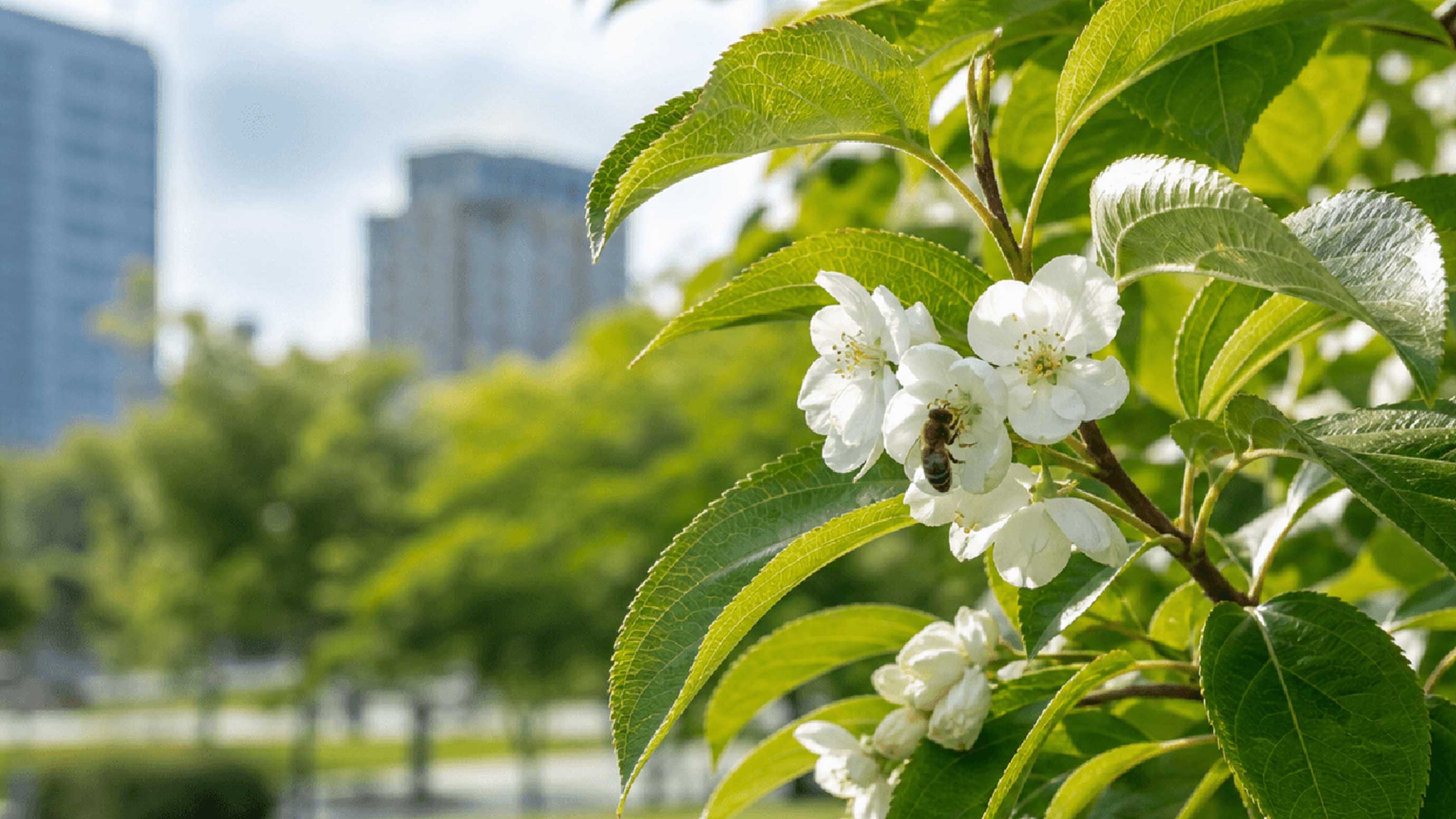
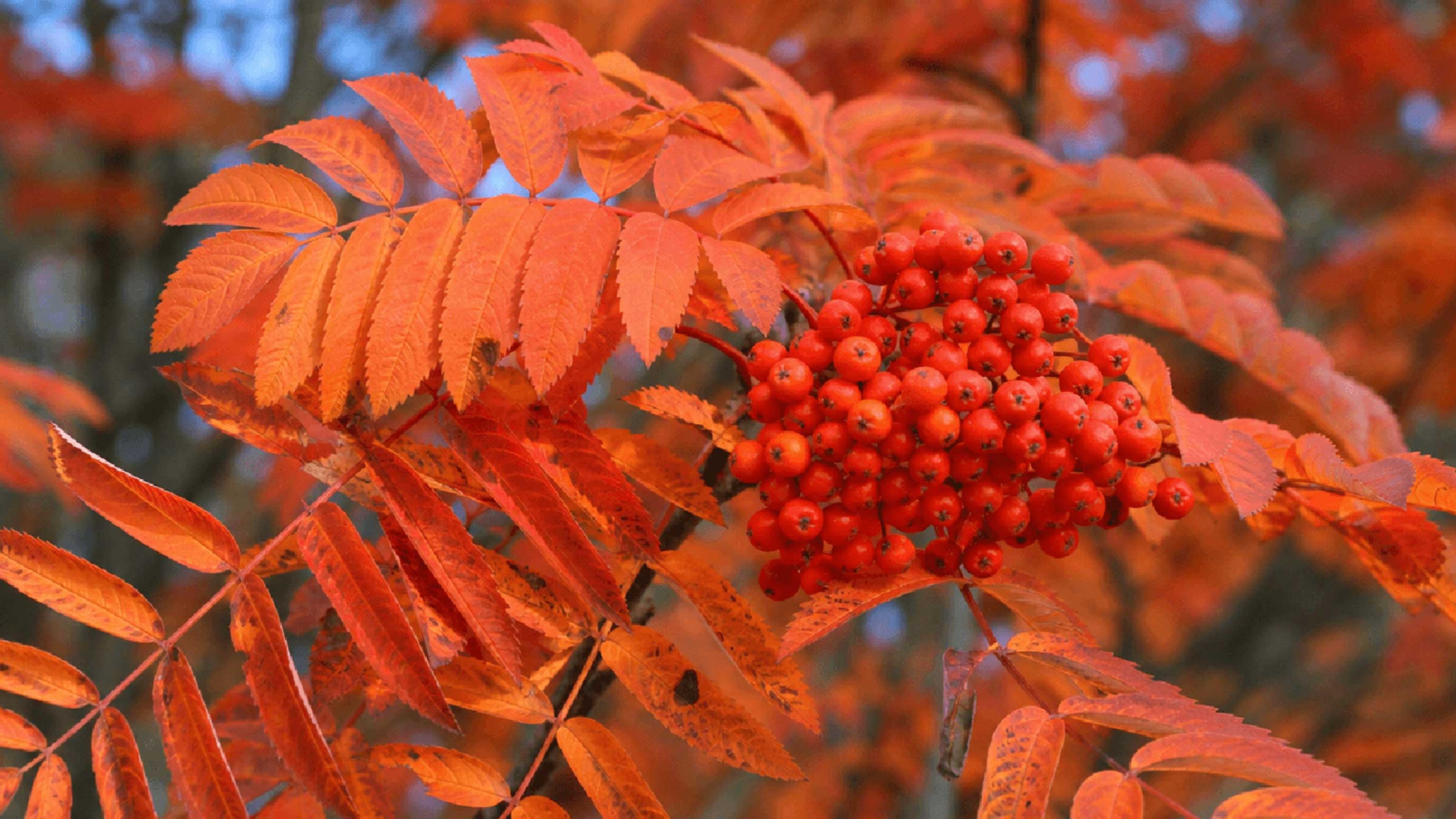
Finally, Dr Schönfeld has a personal recommendation for a climate-resilient small tree that is particularly well suited to private gardens: Japanese rowan (botanical name: Sorbus commixta ‘Dodong’). In his view, it combines three outstanding qualities:
- attractive white flowers in spring that provide food for insects
- a spectacular orange-red autumn colour
- numerous orange-red berries that are eagerly eaten by birds
One source for Japanese rowan is Bruns nursery, whose team looks forward to welcoming visitors to their stand at GaLaBau 2026 (Hall 3A, Stand 3A-319). You can also find further plant suppliers quickly and easily via our exhibitor search.